Inquiry
Form loading...
0%

When it comes to safety, choosing the right Fire Exit Signs is really important. Safety pro John Sullivan from SafeTech Solutions puts it simply: "Good signage can actually save lives when it matters most." That just highlights how crucial these signs are in guiding folks to safety when things get serious.

Make sure your Fire Exit Signs are both visible and easy to understand. After all, they need to help people find the exits quickly during those tense moments. Picking the wrong signs can cause unnecessary confusion, so it’s super important to think about your building’s layout. Like, where will people be when an emergency actually happens?

And don’t forget about the details — color, size, and where you put these signs all matter big time. Bright colors are great because they catch the eye, but I still see too many buildings skimping on proper signage. That can really be a dangerous oversight. So, take a moment to consider these little things — it could make a huge difference in keeping everyone safe.

How to Choose the Right Fire Exit Signs for Your Building?

Understanding Fire Exit Sign Regulations and Standards

When choosing fire exit signs, it’s essential to understand regulations and standards. These rules help ensure safety. Most buildings need to follow local, national, or international standards. Signs should be visible and easily understood. They often must include symbols and text.

Tips: Use high-contrast colors. Bright colors catch attention. Keep wording simple. The sign should say "EXIT" or use a clear symbol. Ensure the sign is legible from a distance. Poor visibility can lead to confusion in emergencies.

Placement is also crucial. Signs need to be located at all exits and along escape routes. Avoid placing them behind doors or in corners. It’s easy to overlook a poorly placed sign. Regularly check for obstructions, like furniture or decorations.

Consider the specific needs of your building. Different workplaces may have unique requirements. Evaluate the types of hazards present. Employee training is vital. A well-informed team can respond better during a crisis.

Assessing Building Layouts and Occupancy Types for Sign Placement

How to Choose the Right Fire Exit Signs for Your Building?

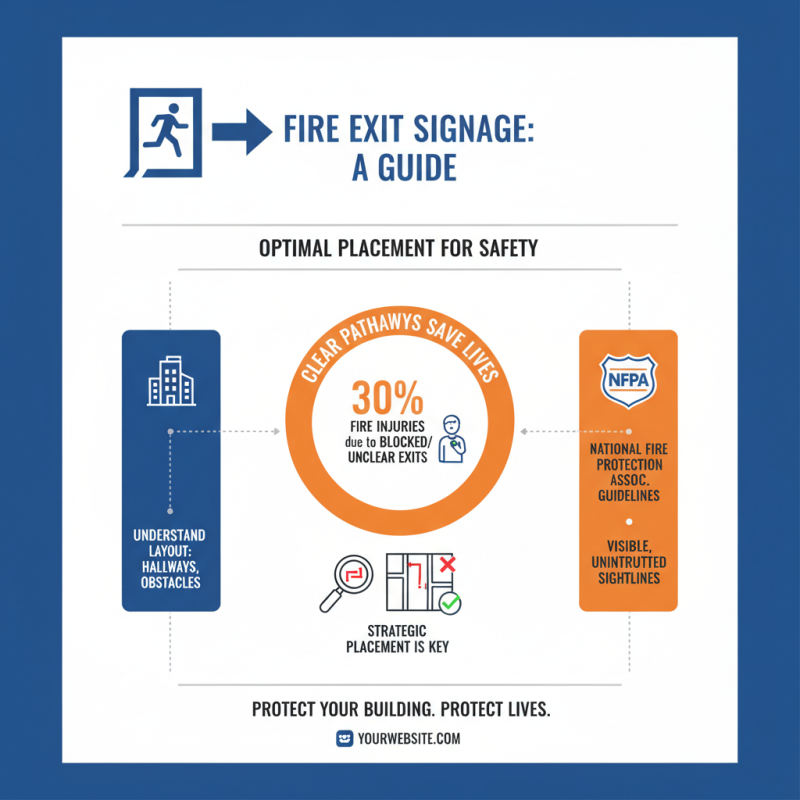
When selecting fire exit signs, understanding your building's layout is crucial. Different structures have various pathways and distinct obstacles. For example, long hallways can obscure signs if not strategically placed. According to the National Fire Protection Association, nearly 30% of fire-related injuries occur because individuals could not find the exit. Thus, sign placement must be clear, especially in complex environments.

Occupancy types also influence sign placement. Residential buildings may require different approaches compaRed to commercial spaces. For instance, office buildings with numerous cubicles should have signs visible from multiple angles. The National Institute of Standards and Technology indicates that human reaction time to an emergency diminishes as density increases. This suggests signage must be prominently displayed.

Consider the potential for confusion. A crowded mall may lead to overlooked signs if they blend with other visual elements. Inadequate signage can lead to panic. A poorly designed exit route can trap people rather than guide them. Proper assessments of layouts and occupancy ensure that fire exit signs serve their purpose effectively.

Evaluating Sign Visibility and Illumination Requirements

When choosing fire exit signs, visibility is crucial. Signs must be easily seen from a distance. Consider the colors and fonts used. Bright colors like red are effective. Large lettering helps convey urgency. Placement matters too; signs should be at eye level and unobstructed.

Illumination is another key factor. In low-light conditions, illuminated signs stand out better. These can be internally lit or made with reflective materials. Test visibility under various lighting conditions. Signs should remain effective, even during power outages.

Regular maintenance is vital; check for wear or damage to ensure clarity. It’s easy to overlook these details. Sometimes, signs blend into their surroundings. This can lead to confusion during emergencies. Reviewing your choices with others can provide new insights. Feedback from building occupants can reveal potential gaps in visibility and illumination.

Choosing Between Photoluminescent and Electric Signs

When it comes to fire exit signs, you often face a choice between photoluminescent and electric options. Photoluminescent signs absorb light and glow in darkness. They require no power source. This feature can be crucial during power outages. However, their visibility heavily depends on the ambient light. Sometimes, they may not glow brightly enough in poorly lit conditions.

On the other hand, electric signs provide consistent brightness. They can be illuminated even during blackouts when equipped with battery backups. This reliability enhances safety in emergencies. Yet, electric signs depend on wiring and maintenance. Installing them can be more complex due to these factors. You need to reflect on which option best meets your building's unique needs. Consider the layout, occupancy, and maintenance capabilities.

Both options come with pros and cons. Some may argue that electric signs are superior, while others prefer the simplicity of photoluminescent signs. The ultimate goal is clear communication in emergencies. Your building’s choice should reflect that commitment to safety and accessibility.

Incorporating Braille and Additional Accessibility Features

When creating fire exit signs, accessibility features are crucial. Many people rely on Braille to navigate spaces safely. According to the International Code Council, about 19% of the U.S. population has some form of disability. This emphasizes the importance of incorporating Braille on fire exit signs. Deaf and hard-of-hearing individuals also benefit from clear visual cues. Clear images can guide them during emergencies.

Tip: Use standardized Braille specifications to ensure consistency. This ensures that wheelchair users, those with visual impairments, and others can easily read the signs. Signs should be placed at appropriate heights for different users. The ideal height for Braille signage is usually 48 inches from the ground.

Incorporating colors also aids visibility. The contrast between the sign and background makes a difference. Research shows that signs with high contrast can increase visibility by up to 70%. However, some buildings utilize dull colors. This can lead to confusion during emergencies. Regular audits of sign visibility can address this issue.

Tip: Analyze the surrounding environment. Ensure that signs are not obstructed by furniture or other elements. Regular feedback from users is essential to improve accessibility features. Keeping open lines of communication helps in making timely adjustments.

Assessing Durability and Material Options for Long-Term Use

Choosing the right fire exit signs involves careful consideration of materials. Durability is crucial. Signs should withstand various conditions. For indoor use, materials like vinyl or rigid plastic work well. They resist wear and tear over time. Outdoor signs need to endure weather elements. Metal options can be a good fit, but they may rust if not coated properly.

It's essential to consider visibility as well. Bright colors and clear fonts are important for quick recognition. However, some materials fade faster than others under sunlight. This can diminish visibility. Reflective materials can enhance visibility at night. Still, you must balance durability with appearance.

Regular inspections are necessary to ensure signs remain effective. Over time, signs can become damaged or obscured. Replacing worn-out signs is vital for safety. It’s worth spending time to assess the best options. The right choice can make a significant difference in an emergency.

Durability Assessment of Fire Exit Signs by Material

Regular Maintenance and Compliance Checks for Fire Exit Signs

How to Choose the Right Fire Exit Signs for Your Building?

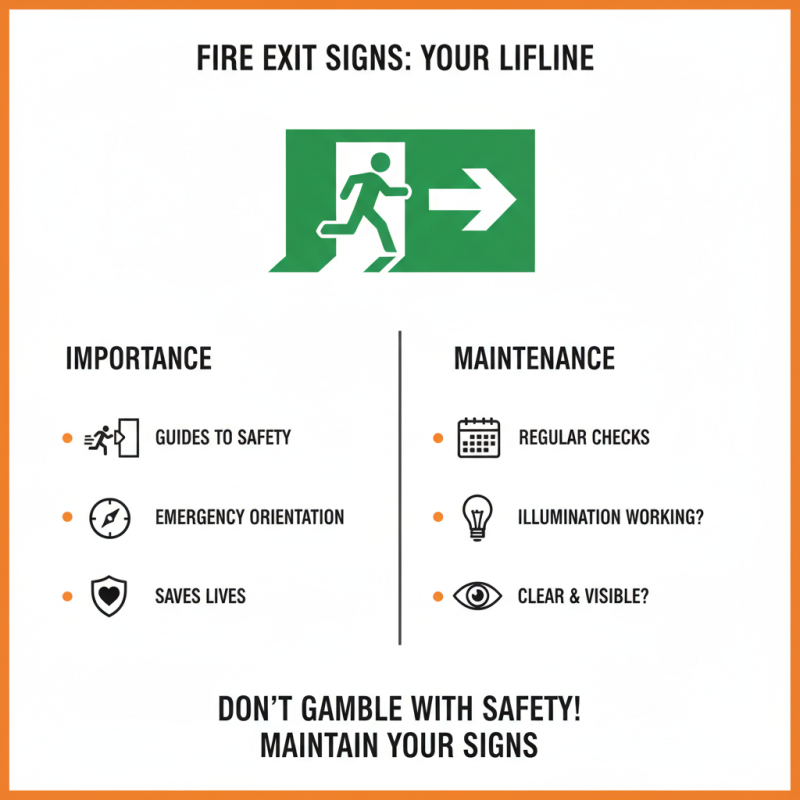
Fire exit signs are crucial for safety in any building. They guide people to safety during emergencies. However, simply installing signs is not enough. Regular maintenance is vital to ensure they are effective.

Check the signs routinely for any damage or fading. A sign that is hard to read is not helpful. Replace burned-out lights promptly. Periodic inspections can reveal hidden issues. Over time, dirt and grime may obscure a sign’s visibility.

Training staff to maintain and check these signs can be beneficial. Encourage them to report any problems immediately. Keeping a record of maintenance checks is useful, too. This practice helps in compliance with safety regulations. Buildings should strive to have clear, visible exit signs at all times.

FAQS

: What is the main purpose of the article?

: The article aims to inform readers about a specific topic. It provides insights and analysis.

Who is the target audience?

The target audience includes individuals interested in the subject matter. They may seek to deepen their knowledge.

How can this information be applied?

Readers can apply the information to real-life situations. It may enhance understanding or influence decisions.

Are there any conflicting viewpoints?

Yes, there are different perspectives presented. This encourages readers to think critically about the topic.

What are common misconceptions?

One misconception is oversimplifying the issue. The article highlights the complexity involved in understanding it.

Is there a call to action?

Yes, readers are encouraged to engage further with the content. They may want to explore related topics.

How often should one revisit this information?

It is beneficial to revisit periodically. This helps reinforce understanding and adapt to new insights.

What should readers reflect on after reading?

Readers should consider their own beliefs and assumptions. Reflection can lead to deeper personal growth.

Are there practical examples given?

Yes, the article provides specific scenarios. These examples illustrate points made in the text.

What can be improved in the article?

Some arguments could be more clearly articulated. Others may require additional evidence for support.

Conclusion

Selecting the appropriate Fire Exit Signs for a building is crucial for ensuring safety and compliance with regulations. It is essential to understand the relevant fire exit sign regulations and standards, as well as to assess the building's layout and occupancy types to determine optimal sign placement. Signs must be visible and adequately illuminated, meeting specific requirements to guide occupants in emergencies.

Additionally, choosing between photoluminescent and electric signs depends on factors such as visibility during power outages. Incorporating Braille and other accessibility features ensures that all individuals can navigate safely. Durability and material selection are vital for long-term use, while regular maintenance and compliance checks are necessary to uphold safety standards. By considering these factors, one can effectively enhance the safety and functionality of fire exit signage in any building.

Ava

Ava

Ava is a dedicated marketing professional at Yuyao Lixin Electronics Co., Ltd., where she brings a wealth of expertise and a passion for technology to her role. With a strong background in the electronics industry, Ava possesses an in-depth understanding of the company's core products, which......
Previous Essential Features and Applications of Emergency Escape Lighting Solutions