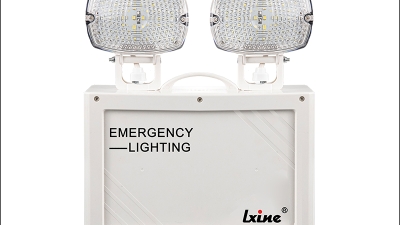
Hey there! You know, in our crazy fast-paced world, having reliable power sources is super important—especially when emergencies hit. Just to give you an idea, a report from the National Fire Protection Association showed that around 3,390 fires were reported back in 2021. That really highlights how crucial effective emergency lighting and power solutions are, right? Emergency Batteries are like the unsung heroes, making sure that fire and security electronics stay up and running when things get tough.
At Yuyao Lixin Electronics Co., Ltd., we totally get how vital quality emergency batteries are. We specialize in fire and security electronics, and we know they have to meet some pretty tough standards. That’s why we prioritize products like addressable emergency lights and Smoke Detectors. Our goal? To provide you with the right tools to help protect lives and property when emergencies strike.
In this guide, we’re going to dive into ten key specs you should keep in mind when you’re on the hunt for the best emergency batteries to really power your needs effectively. Let’s get started!
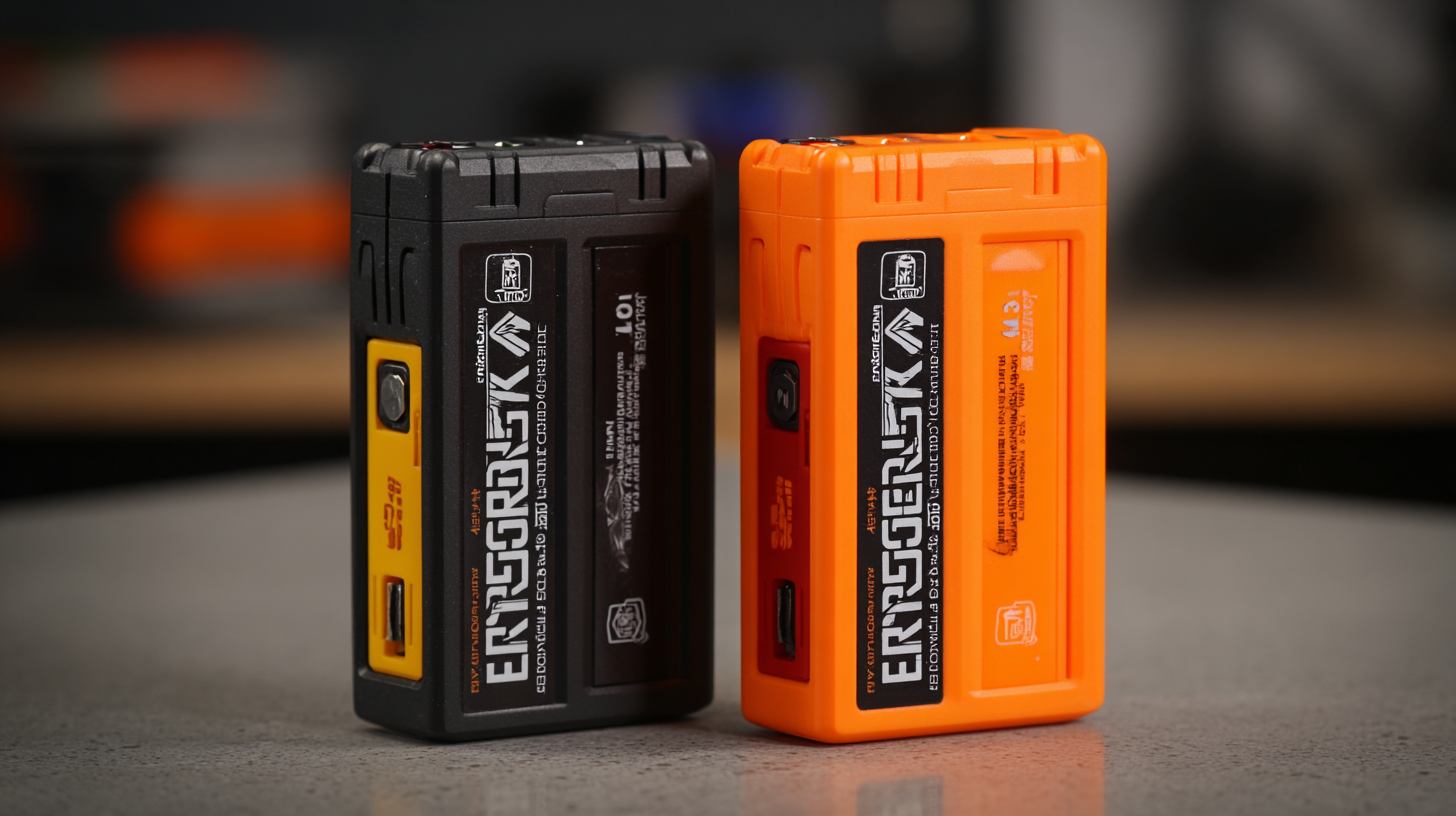
The Importance of Battery Capacity: Understanding mAh Ratings for Your Emergency Needs
So, let’s talk about picking the right emergency batteries. You know, it’s really important to get a grip on battery capacity, especially when we're talking milliamp hours, or mAh for short. Basically, the mAh rating tells you how long your battery can keep going before it’s time to recharge. In emergency situations, where power can be pretty unpredictable, going for batteries that have higher mAh ratings is definitely the way to go. That way, your crucial gadgets—like flashlights, phones, or even medical devices—can keep running when the lights go out or things get tricky.
To break it down a bit, if you’ve got a device that usually uses around 100mA of current, then a 2000mAh battery could, in theory, keep it powered for about 20 hours. Pretty cool, right? This kind of knowledge not only helps you figure out how many devices you can use at once but also how long they’ll stay up and running. So, seriously, when you prioritize batteries with those higher mAh ratings, it can really make a difference in your emergency prep. You’ll feel way more at ease knowing your essential tools will actually work when you need them most.
| Battery Type | Capacity (mAh) | Voltage (V) | Size (mm) | Weight (g) | Rechargeable |
| Lithium-ion | 3000 | 3.7 | 18650 | 45 | Yes |
| NiMH | 2000 | 1.2 | AA | 30 | Yes |
| Lead Acid | 10000 | 12 | 150 x 65 x 95 | 3,000 | No |
| Lithium Polymer | 4000 | 3.7 | 150 x 100 | 60 | Yes |
| Alkaline | 1200 | 1.5 | AA | 25 | No |
Comparative Analysis of Battery Types: Lithium-ion vs. Lead-acid for Longevity and Efficiency
In the realm of power solutions, the choice of battery type significantly influences performance, longevity, and efficiency. Conducting a comparative analysis between lithium-ion and lead-acid batteries reveals crucial differences that can inform your purchasing decisions. 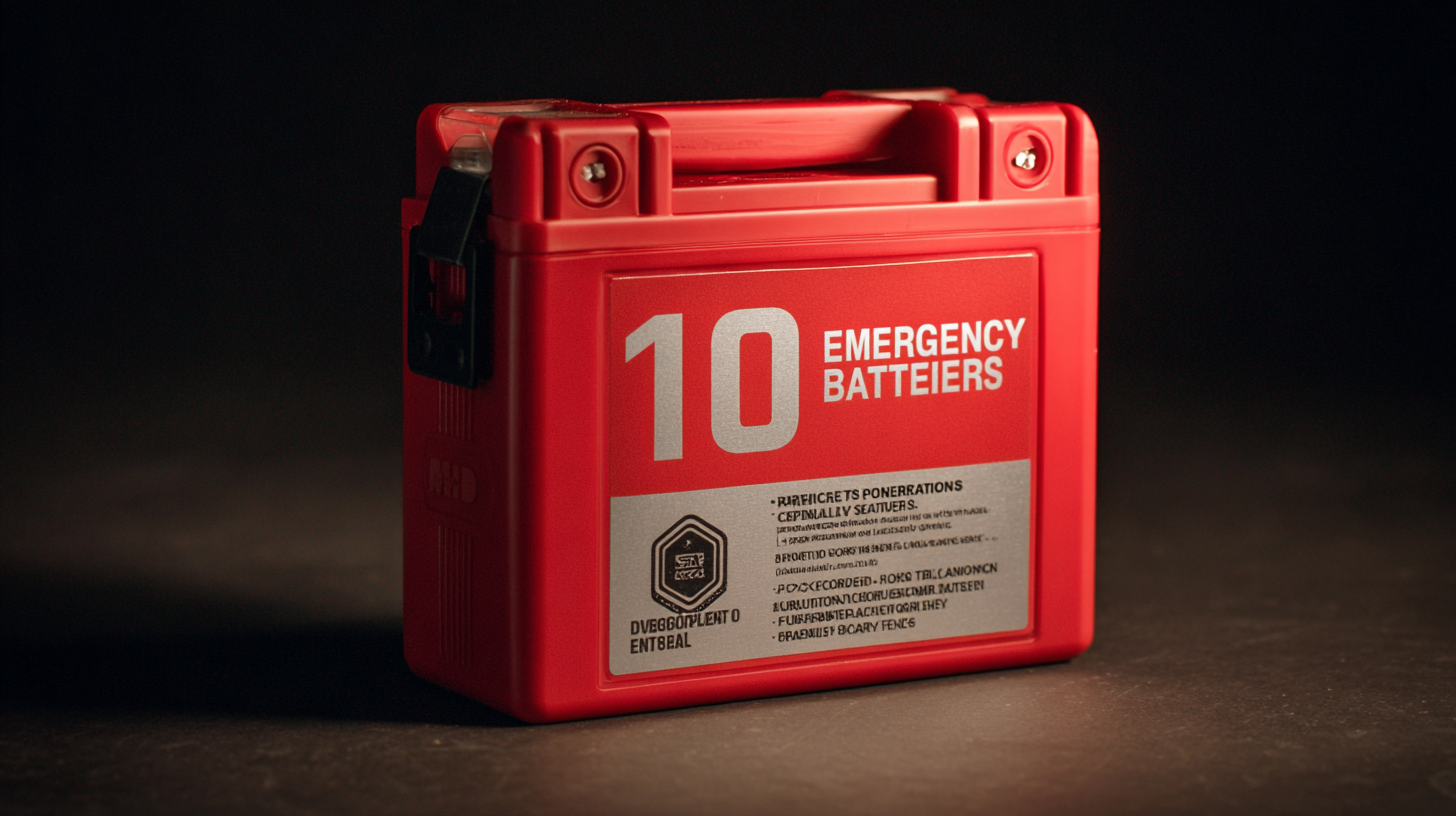 Lithium-ion batteries are known for their high energy density and light weight, making them ideal for portable applications. They typically boast a longer lifespan, capable of lasting several years with minimal capacity degradation. Additionally, their fast charging capabilities enhance convenience, allowing users to maintain productivity even in emergency situations.
On the other hand, lead-acid batteries have established themselves as a reliable choice for stationary applications, particularly in contexts where cost-effectiveness is paramount. They are robust and have a proven track record, making them suitable for backup power systems and renewable energy storage. However, their heavier weight and lower energy density compared to lithium-ion options can limit versatility.
As the battery simulation software market expands, these specifications will play a critical role in helping users select the best battery type based on their specific needs, whether it's for home, business, or emergency preparedness. Understanding these key attributes can lead to informed decisions that ensure efficient and reliable power management.
Discharge Rates Explained: How to Choose Batteries That Maintain Power Under Load
Choosing the right emergency batteries? It all comes down to understanding discharge rates if you want to make sure you have reliable power when you really need it. Discharge rate is basically how fast a battery can let go of its stored energy. A study by the Battery Council International points out that a battery’s capacity can take a hit based on its discharge rate. You know, a lot of batteries just don’t perform as well under heavy load. Take a regular lead-acid battery, for example—it can deliver up to 30% less capacity when you push it hard! That really shows why it’s key to pick batteries that can still run strong even when the pressure's on.
Then there’s the C-rate, which is kind of a fancy way to describe how quickly a battery can be charged or discharged compared to its capacity. Research from the Journal of Power Sources highlights that batteries with a higher C-rate usually do better when the discharge levels go up—perfect for those emergency situations. Lithium-ion batteries are a great choice here, as they can hit C-rates anywhere from 1C to 3C, giving you a faster power boost when you need it most. In short, when you’re in the market for emergency batteries, it’s super important to check out both their discharge rates and their C-rates. Doing so will help ensure they meet your energy demands in those critical moments!
Temperature Tolerance: Essential Specifications for Extreme Weather Performance
When you're picking out emergency batteries, one of the big things to keep in mind is how well they can handle temperature extremes. You don’t want to be caught off guard, right? A report from the Battery Research Institute points out that it's best for emergency batteries to work in temperatures between -20°C and 60°C. Why is this important? Well, a lot of disasters strike when the weather is at its worst, and your regular batteries might just let you down when things heat up or freeze over, leaving you without the power you need.
Now, let’s talk battery chemistry for a second. Lithium-ion batteries really shine here—they're tough enough to keep about 80% of their capacity even at -20°C, which is pretty impressive. On the flip side, lead-acid batteries don't hold up nearly as well; they can lose around 50% of their effectiveness in the same cold temps. And don’t forget about heat! High temperatures can speed up those chemical reactions inside, which often means a shorter lifespan for the battery. In fact, for every ten degrees you increase the temperature, traditional lead-acid batteries might only last half as long as they should! So, picking the right battery that can tackle those temperature swings is key—not only will it give you reliable power during emergencies, but it’ll also help your batteries stick around for the long haul in different weather conditions.
Temperature Tolerance of Emergency Batteries
This chart represents the temperature tolerance of various emergency battery models, illustrating how they perform under extreme weather conditions. The data reflects the maximum operating temperature each battery can withstand, which is crucial for users requiring reliable power supply during emergencies.
Safety Features in Emergency Batteries: Why Protection Circuits Matter for Reliability
When you think about emergency batteries, safety features really should be at the top of your list. I mean, having good protection circuits is super important for making sure these devices work when you need them the most. A battery that's designed well, with strong protection circuitry, doesn’t just last longer; it also reduces the chances of things like overheating or short-circuiting, which can lead to issues like your device failing or, worse, even catching fire. Plus, these safety features help keep your devices safe by managing the voltage and current flow, which definitely gives you some peace of mind—especially when power is low!
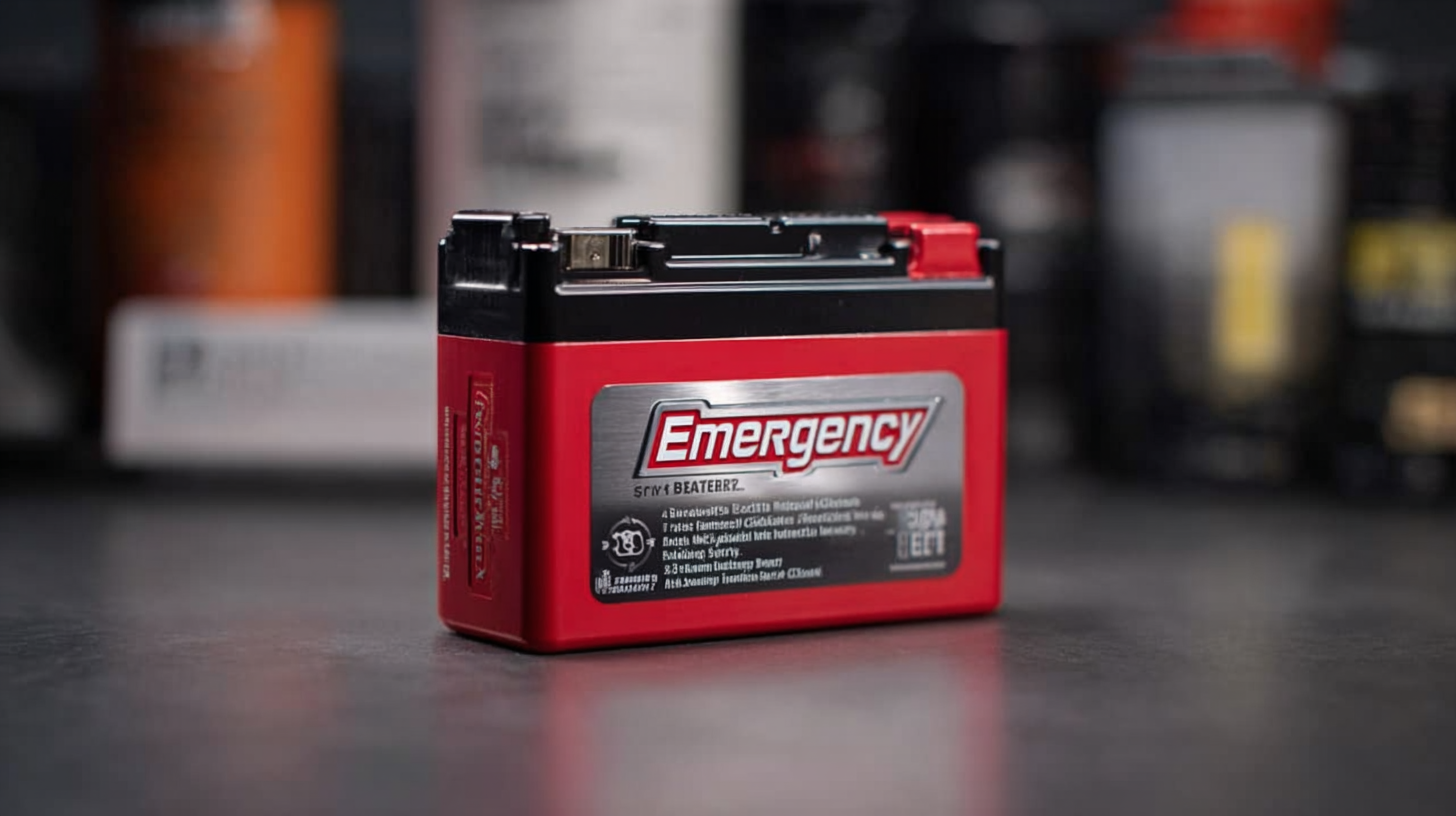
In a world that’s all about tech, we’re more reliant on our gadgets than ever. So, seriously, investing in an emergency battery that’s packed with these safety features is a smart move. Whether you’re on the go, stuck in a blackout, or just need a dependable backup for your phone, going for a battery that puts safety first is key to getting the support you really need. Trust me, you don’t want to wait until you’re in a tough spot; knowing how important these protective features are can totally change how well you’re able to keep your devices charged up and ready to roll.
The Impact of Cycle Lifespan on Battery Longevity: Data-Driven Insights for Consumers
Hey there! So, if you’re in the market for emergency batteries, there's something super important you might want to keep in mind: the cycle lifespan. A lot of folks don’t pay much attention to this, but here's the scoop—research shows that lithium-ion batteries usually last between 500 and 1,500 cycles, and this can really depend on how you use them and the conditions they’re in. If you get a good handle on how long these batteries can last, you’ll be able to make smarter choices that fit your needs right now and guarantee reliable performance down the road. For example, a solid study from the National Renewable Energy Laboratory points out that if you stick to optimal charging habits, you can actually stretch your battery’s life a lot further. That just goes to show why managing those practices is key to keeping them usable for longer.
Pro tip: Make sure you store your batteries in a cool, dry spot and steer clear of any extreme temps—it really helps them live longer. Plus, giving the charge level a quick check and steering clear of letting them drain too much can really boost how many cycles they go through. This way, you’re all set when an emergency hits.
Now, it's also really helpful to understand how different battery chemistries can impact lifespan. For instance, lead-acid batteries generally only give you about 200 to 300 cycles, but some of those advanced lithium-based batteries can go beyond 2,000 cycles. This big difference is exactly why it’s so crucial to choose the right battery for emergency prep. The right one not only gives your devices power during rough times but can also hold up through all those recharge cycles.
Another little tip: If you can, go for batteries that boast high cycle counts—it’s an investment that definitely pays off during long-term outages when you need that reliability the most!
Maximizing Safety: The Impact of Advanced Fire Detection Systems and Emergency Lighting Solutions in Modern Buildings
In modern architecture, the integration of advanced fire detection systems and emergency lighting solutions is paramount to ensuring safety and minimizing risks in buildings. According to the National Fire Protection Association (NFPA), effective fire detection systems can reduce the risk of fire-related injuries by up to 56%. This significant statistic emphasizes the crucial role that well-designed fire detection systems play in saving lives and protecting property. With technologies such as smart smoke detectors and heat sensors, real-time alerts can be sent to emergency services, allowing for quicker response times and improved outcomes during emergencies.
Equally important is the deployment of emergency lighting solutions, which are essential for guiding occupants to safety during an evacuation. The Illuminating Engineering Society (IES) notes that well-illuminated escape routes can decrease evacuation times by 30%, showcasing the life-saving benefits of proper lighting. Modern emergency lighting systems are now equipped with LED technology and smart sensors, ensuring that they not only meet safety standards but also provide energy efficiency. As buildings grow in complexity, combining advanced fire detection and emergency lighting systems becomes essential for maximizing safety and ensuring compliance with local regulations. Together, these solutions create a cohesive safety infrastructure that protects lives and property in our contemporary built environment.
FAQS
: Emergency batteries should ideally operate within a temperature range of -20°C to 60°C to ensure optimal performance in extreme weather conditions.
Temperature tolerance is crucial because many disasters occur during harsh weather. Standard batteries can fail in extreme temperatures, potentially leaving users without necessary power.
Lithium-ion batteries maintain approximately 80% of their capacity at temperatures as low as -20°C, whereas lead-acid batteries can lose up to 50% of their effectiveness under similar conditions.
Elevated temperatures can accelerate chemical reactions, leading to shorter lifespans for lead-acid batteries. Reports suggest that for every 10°C increase in temperature, the lifespan can be reduced by up to 50%.
Protection circuits are essential safety features that ensure the reliability of emergency batteries, helping to prevent risks like overheating or short-circuiting.
Protection circuits extend the battery's lifespan and minimize risks by controlling voltage levels and current flow, thus preventing potential device damage during critical situations.
Investing in an emergency battery equipped with protective features is crucial for ensuring reliability, especially during power outages or emergencies, providing peace of mind when power is scarce.
Yes, an emergency battery with robust protection circuitry can prevent damage to devices by controlling voltage levels and current flow effectively.
You should consider using an emergency battery when traveling, during power outages, or whenever you need a reliable backup for your devices, particularly in extreme weather conditions.